

All About Doodle Dog Sizes
_______________
The Important Things to Understand
Bubbling Springs Bernedoodle
Our Doodle Puppy Sizing Guide
__________
Our Standard F1 Bernedoodles will grow to be between 60 – 80 lbs. as the Bernese Mountain Dog is a Large Breed Dog that can weigh around 100lbs.
Ultra Bernedoodles will grow to be between 55-65 pounds.
Our Mini Bernedoodles will be between 40 – 50lbs,
They will be smaller in stature and maintain the great structure needed to have a smaller healthy doodle for families looking to add a doodle to their family that isn't over 50lbs. This size makes for a versatile companion that is a suitable lap dog and can also keep up with an active family.
Micro Bernedoodles will be between 25 -35 pounds.
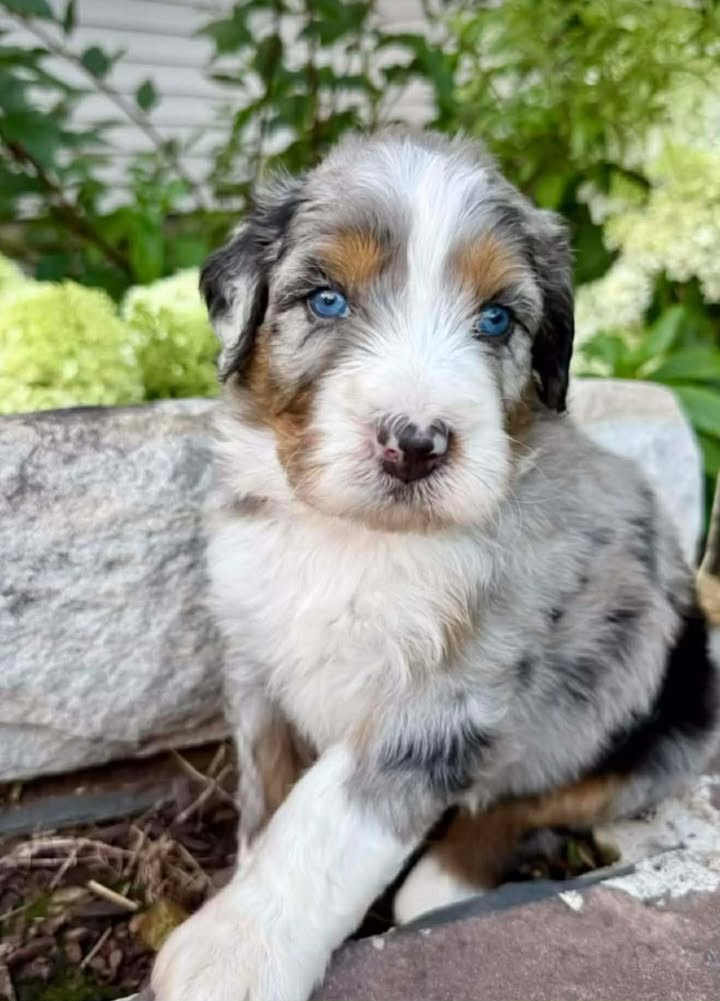
Colors: We produce Traditional Tri, Blue Merle tri, and coming soon Red.
Bernedoodles—a cross between a Bernese Mountain Dog and a Poodle—are unique because their size isn't standardized. Since Poodles come in three distinct sizes (Toy, Miniature, and Standard), the resulting Bernedoodle offspring can range from a small lap dog to a giant companion.
Here is a breakdown of the typical sizing categories, physical characteristics, and factors that influence their ultimate growth.
Bernedoodle Size Categories
Because this is a hybrid breed, sizes are generally categorized by the Poodle parent's size. Weight and height can vary based on whether the dog is a first-generation cross (F1) or a backcross (F1b).
| Category | Average Weight | Average Height (at shoulder) |
| Tiny / Toy | 10 – 24 lbs | 12 – 17 inches |
| Miniature | 25 – 49 lbs | 18 – 22 inches |
| Standard | 50 – 90+ lbs | 23 – 29 inches |
Detailed Size Descriptions
1. Tiny (Toy) Bernedoodle
The Tiny Bernedoodle is usually produced by crossing a Toy Poodle with a Miniature Bernedoodle. These are bred primarily as companion pets suitable for apartment living.
- Best for: People with limited space or those who want a portable "lap dog."
- Growth Note: They tend to reach their full adult weight much faster than larger varieties, often by 9–10 months.
2. Miniature Bernedoodle
The Miniature is a middle-ground choice, typically resulting from a Miniature Poodle crossed with a Bernese Mountain Dog.
- Best for: Active families who want a sturdy dog that is still manageable in size for travel and smaller homes.
- Physicality: They are often quite stocky, inheriting the "blocky" build of the Bernese Mountain Dog but in a scaled-down frame.
3. Standard Bernedoodle
This is the original version of the hybrid, crossing a Standard Poodle with a Bernese Mountain Dog.
- Best for: Owners with large yards and plenty of space.
- Variation: Because a male Bernese Mountain Dog can weigh over 100 lbs, a Standard Bernedoodle can occasionally exceed the "90 lbs" estimate, reaching "Giant" territory.
Factors Influencing Final Size
Generation (F1 vs. F1b)
- F1 (50% Bernese, 50% Poodle): Usually results in a more predictable "middle ground" size but can produce "throwbacks" where a puppy significantly favors one parent's size.
- F1b (25% Bernese, 75% Poodle): Often slightly smaller and leaner than F1s because they have a higher percentage of Poodle genetics.
Sexual Dimorphism
As with most breeds, males are consistently larger and heavier than females. In Standard Bernedoodles, the weight gap between a male and female from the same litter can be as much as 15–20 lbs.
The "Poodle Lean" vs. "Bernese Bulk"
A Bernedoodle's weight is heavily influenced by its bone structure.
- A puppy inheriting the Poodle's athletic, slender frame will weigh less even if they are tall.
- A puppy inheriting the Bernese's heavy bone structure will be much denser and heavier, even if they are shorter in stature.
Developmental Timeline
- Tiny/Mini: Usually reach their full height by 12 months and "fill out" (muscle/fat) by 15 months.
- Standard: Can continue growing in height until 18 months and may not reach their full adult weight and chest breadth until they are 2 years old.